 Call Us : 08045813082Call Us : 08045813082

 Send Inquiry
Cold Working Tool Steel
Price 75 INR/ Kilograms
MOQ : 5 Kilograms
Cold Working Tool Steel Specification
- Alloy
- Cold Working Tool Steel
- Usage
- Industrial
- Surface Treatment
- Polished
- Product Type
- Steel
- Grade
- D2
- Thickness
- 12-100 Millimeter (mm)
- Length
- 2500-6000 mm Millimeter (mm)
- Width
- 200-800 mm Millimeter (mm)
- Application
- Machinery, Die-Making, Cutting Tools
- Color
- Grey
- Corrosion Resistance
- Moderate
- Impact Toughness
- High
- Hardness
- 58-60 HRC
- Standard
- AISI, DIN, JIS
- Density
- 7.7-8.0 g/cm3
- Delivery Condition
- Annealed
- Machinability
- Good
- Heat Resistance
- Excellent
- Tensile Strength
- Up to 2000 MPa
Cold Working Tool Steel Trade Information
- Minimum Order Quantity
- 5 Kilograms
- Payment Terms
- Cash Advance (CA), Cash in Advance (CID)
- Supply Ability
- 1000 Kilograms Per Day
- Delivery Time
- 7 Days
- Main Domestic Market
- All India
Cold Working Tool Steel About
The Cold Working Tool Steel is essentially high carbon steel, which contains relatively low alloy additions of tungsten, manganese, chromium and molybdenum. These alloy additions increase harden ability, permitting oil quenching with less distortion than with the W series. The steel basically is high carbon steel; the alloy content contains tungsten, manganese, and chromium and molybdenum relatively low alloy steel. They consist of air-hardening and oil-hardening tool steels. The Cold Working Tool Steel is made for use in various industries.
Specification
|
Usage/Application |
Automobile Industry |
|
Hardness |
58-62 |
|
Material |
Die Steel |
|
Surface Condition |
Black |
|
Thickness |
12-100mm |
|
Country of Origin |
Made in India |
Exceptional Hardness and Strength
Cold Working Tool Steel D2 stands out due to its remarkable hardness (58-60 HRC) and high tensile strength (up to 2000 MPa). These attributes make it an ideal choice for heavy-duty industrial tasks, particularly in environments where wear resistance and dimensional stability are paramount for tool longevity.
Versatile Industrial Applications
This alloys excellent heat resistance and impact toughness make it suitable for intricate die-making, precision machinery components, and manufacturing durable cutting tools. Its performance under demanding conditions supports increased productivity and reliable operation in various industrial sectors.
FAQs of Cold Working Tool Steel:
Q: How is Cold Working Tool Steel Grade D2 commonly used in industrial applications?
A: Cold Working Tool Steel D2 is primarily utilized for die-making, machinery parts, and cutting tools thanks to its high hardness, strength, and wear resistance, ensuring extended tool life and consistent performance under rigorous conditions.Q: What benefits does the annealed delivery condition provide for this steel?
A: Being supplied in the annealed condition facilitates easier machining and forming processes before subsequent heat treatment, improving workability for manufacturers and reducing initial tool wear.Q: When should I choose D2 tool steel for my application?
A: Select D2 tool steel when high hardness, excellent heat resistance, and superior impact toughness are required, especially in tooling, dies, and components exposed to significant stress and abrasive environments.Q: Where is this tool steel typically sourced and distributed in India?
A: Cold Working Tool Steel D2 is offered by suppliers, traders, and wholesalers across India who specialize in industrial alloys for machinery, die-making, and cutting tool manufacturing, ensuring availability in major industrial hubs.Q: What is the process for achieving optimal hardness and strength in D2 tool steel?
A: The steel is first delivered annealed, then heat treated through controlled hardening and tempering processes. This increases its hardness to 5860 HRC and maximizes tensile strength, preparing it for rigorous industrial use.Q: How does moderate corrosion resistance affect its usage?
A: While D2 tool steel has moderate corrosion resistance, it is best used in environments where exposure to moisture or corrosive chemicals is limited. Protective measures like polishing or coatings can further enhance durability in such conditions.Q: What surface treatments are available for Cold Working Tool Steel D2?
A: D2 tool steel is commonly polished, enhancing its aesthetics, reducing friction, and providing extra protection against mild corrosive elements, contributing to better performance and longer service life.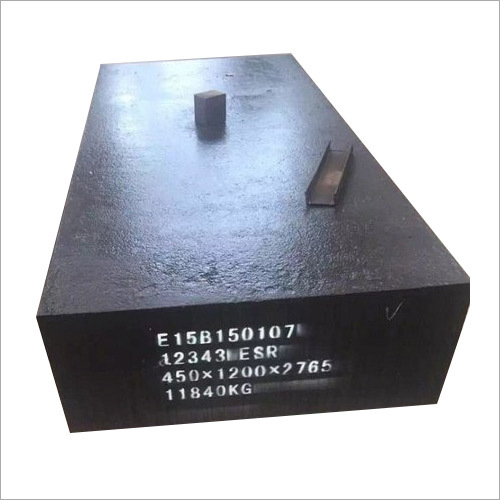
Tell us about your requirement

Price:
Quantity
Select Unit
- 50
- 100
- 200
- 250
- 500
- 1000+
Additional detail
Mobile number
Email


Address
SHREE BALAJI STEEL
GST : 07ADAPJ2258C1Z2
GST : 07ADAPJ2258C1Z2
- Plot No. B-53, Mayapuri, Industrial Area, Phase 1,New Delhi - 110064, India
- Phone :08045813082
-
 Send Inquiry
 Send Inquiry
 Send Inquiry
 Send SMS
 Call Me Free
 |
SHREE BALAJI STEEL
All Rights Reserved.(Terms of Use) Developed and Managed by Infocom Network Private Limited. |
